Growth Ritual #38
🎙️ AUDIO DEEP DIVE OF THIS ISSUE:
Sammy & Mila offer in-depth analysis on each newsletter issue. Subscribe to their podcast.
📊 TRENDS, RESEARCH & REPORTS:
The Paradox of Progress: How the Internet, Mobile, and AI Have Shaped—and Trapped—Us
Every generation has its mantra.
In the late '90s, it was "This is the year of the Internet—everything will change!"
For the next decade, the mobile revolution took center stage: "This is the year of mobile—our lives will never be the same!"
Now, we’re hearing a similar refrain: "This is the year of AI—it’s going to transform the world!"
We realize a technology has become mainstream when we stop hearing these claims and start taking them for granted.
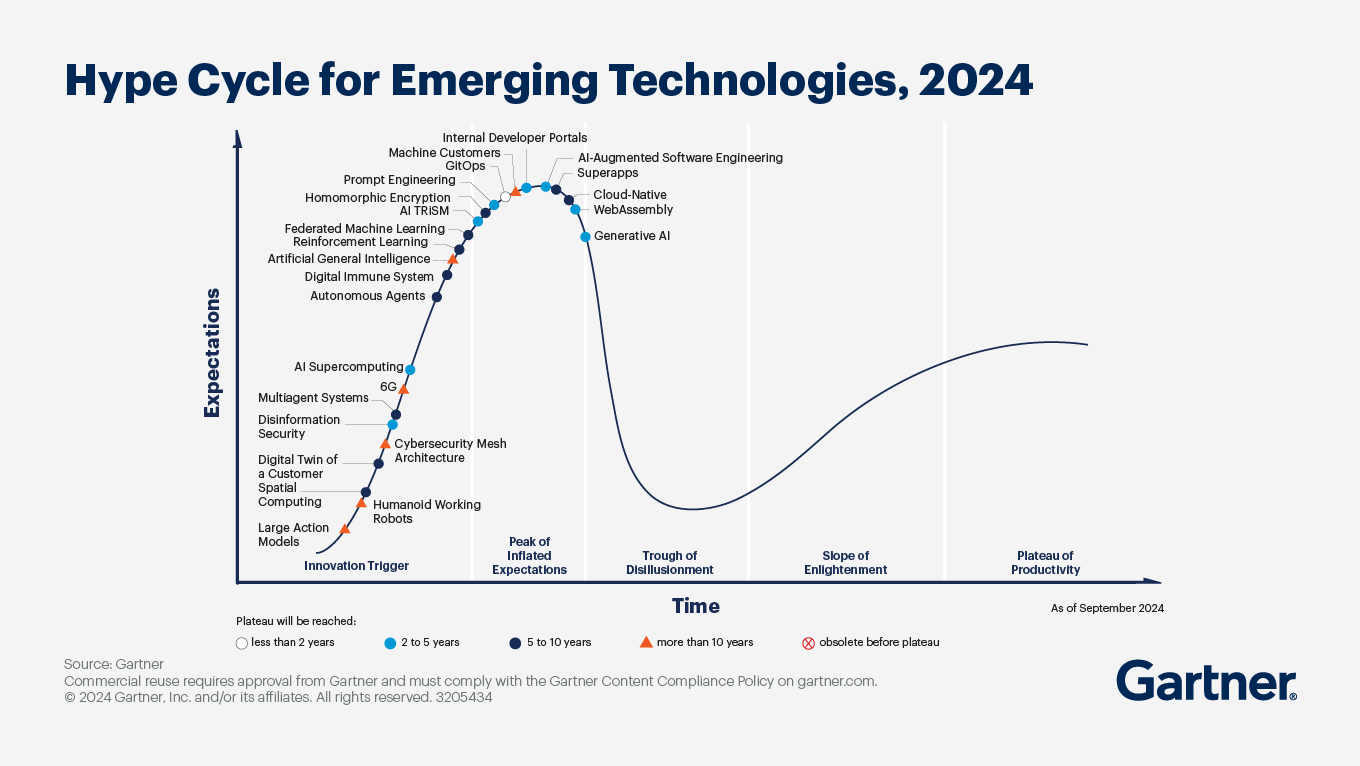
That's why we don't see groundbreaking technologies like mobile and the internet dominating the hype cycle anymore.
They've become so integrated into our lives that they've reached a “productivity plateau”.
As you can see from the graph, the color of these dots can predict the next big “This is the year of...” trend. Each of these small dots represents a technology poised to revolutionize our socio-cultural and professional lives.
But what if this narrative isn't just about transformation?
What if there's a deeper paradox at play?
While we're constantly discussing the innovations and disruptions AI will bring, let's also examine the other side of the coin.
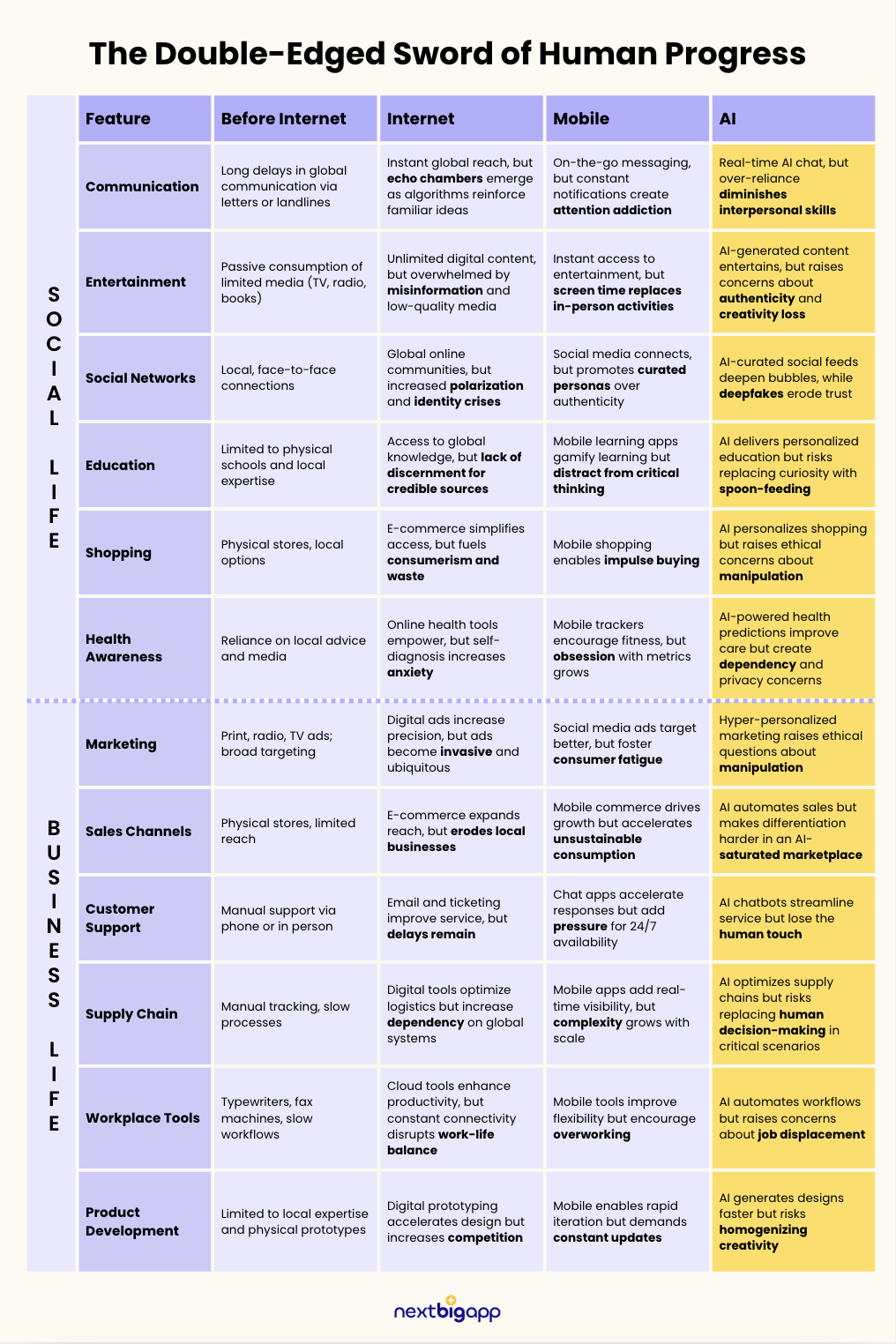
Let’s look back at the past 30 years to better understand how each wave of innovation has both shaped and constrained us.
The Internet: The Great Connector
Picture this: It’s the year 2000. A high school kid in a small town discovers a forum about ancient civilizations.
Here, they connect with professors, hobbyists, and peers from across the globe. The internet has removed the barriers of geography, making knowledge and community accessible to anyone with a dial-up connection.
But fast-forward a few years, and the same internet that connected us also began to polarize us.
Algorithms learned what we liked—and kept feeding it to us.
The forums diversified into echo chambers. Instead of broadening our horizons, many of us found ourselves trapped in the comfortable bubbles of our existing beliefs.
Mobile: Freedom in Your Pocket
Fast-forward to 2010. Smartphones are everywhere.
Imagine a young entrepreneur pitching their startup idea over coffee, immediately pulling out their phone to show their app prototype.
Mobile gave us tools to create, connect, and work from anywhere.
But with this freedom came a cost.
Notifications began dictating our attention. Social media turned “likes” into currency, reshaping how we value ourselves.
Productivity apps blurred the lines between work and life. The devices meant to free us became chains in disguise.
AI: The Ultimate Assistant—or Puppet Master?
Now, here we are, standing on the edge of the AI revolution.
Imagine a small business owner overwhelmed by stagnant sales. They adopt an AI marketing tool, which not only finds their audience but creates ads, manages customer relationships, and predicts trends. Sales skyrocket. AI has become their superpower.
But what happens when the same AI starts deciding what their customers see? Or when every competitor uses AI too, and the marketplace becomes a battleground of indistinguishable, algorithm-driven strategies? And what about the business owner’s own skills—will they still know how to market without the AI crutch?
The Paradox of Personalization
Here’s the twist: Each wave of progress—Internet, Mobile, AI—has followed a similar pattern:
-
Increased accessibility: Knowledge, tools, and connections have become easier to reach.
-
Hyper-personalization: Solutions tailored to individuals have emerged, enhancing convenience.
-
Unintended consequences: These same innovations have created echo chambers, dependency, and new forms of inequality.
The internet gave us everything, but overwhelmed us with options.
Mobile freed us from desks but enslaved us to screens.
And now AI promises to think for us—at the risk of us forgetting how to think for ourselves.
Breaking the Pattern
We’re not doomed to repeat history. Awareness is our greatest weapon. As we powered by AI, we must ask tough questions:
-
How can we use it to amplify our creativity rather than replace it?
-
How do we balance personalization with serendipity—ensuring we still stumble across the unexpected?
-
How do we stay independent thinkers in a world where AI wants to make every decision for us?
The Year of You
Perhaps the future doesn’t belong to the internet, mobile, or AI. Maybe it belongs to those who wield these tools wisely, striking a balance between the power they offer and the humanity they risk eroding.
So here’s a new mantra for the next revolution: "This is the year of us—because only we decide what progress truly means."
Share this if you believe technology is here to serve us—not define us.
💡 INSPIRING IDEAS:
“I think the maybe the most important thing for people to realize about living in the 21st century, as against the Middle Ages or the Stone Age, is that we are now hackable animals.
AI is not even near its full potential; it’s just in its infancy. We haven’t seen anything yet. So, every 10 years, you are likely to lose your job or your job is going to be completely transformed by the new wave of the latest machine learning wizardry. And if you want to stay in the game, you will have to basically reinvent yourself — and not just once, but repeatedly.”
— Yuval Noah Harari
Read next
Growth Ritual #37 - The Hidden Pitfall of AI Adoption
🎙️ AUDIO DEEP DIVE OF THIS ISSUE:
Nov 14, 2024
Growth Ritual #36 - The Brutal Truth About Email Overload & How to Solve It
🎙️ AUDIO DEEP DIVE OF THIS ISSUE:
Nov 7, 2024
Growth Ritual #35
In this issue: From Trust to Conversions: A Playbook for Micro-Influencers *** From Technician to Visionary: Growing a Business That Runs Without You
Oct 31, 2024