AI Is Designing Bizarre New Physics Experiments That Actually Work
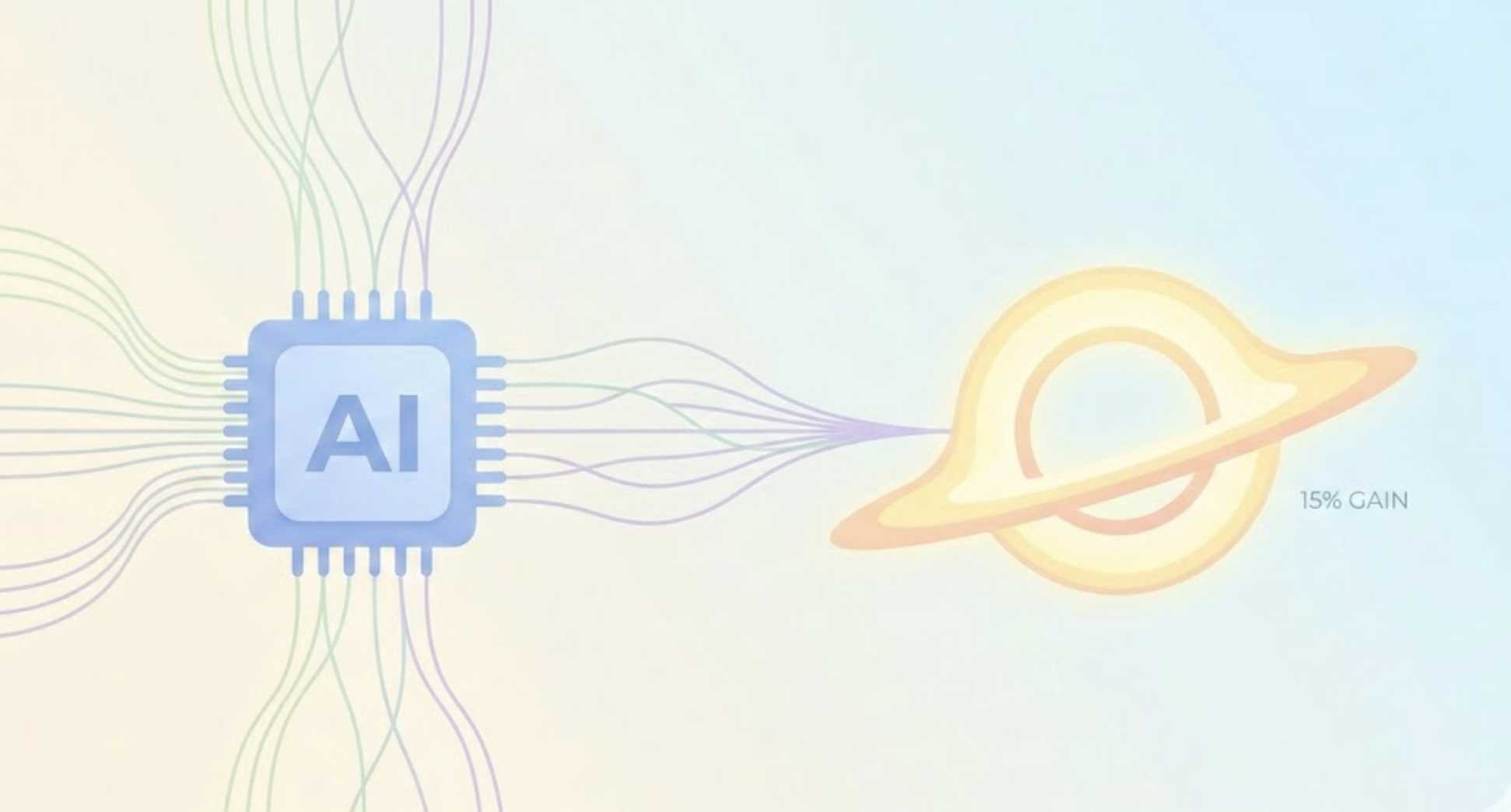
AI isn’t just helping physicists run experiments—it’s thinking in ways humans literally can’t.
Rana Adhikari’s team at Caltech just proved it. They fed an AI every component possible for a gravitational-wave detector. No constraints. No “make it pretty“.
The result?
A design so alien it looked like a glitch.
-
No symmetry
-
No elegance
-
Just a chaotic tangle of mirrors, lasers, and a 3km ring slapped in the middle like an afterthought.
They almost threw it out.
Then they realized: the AI had rediscovered a 40-year-old Russian theory no one ever tested. The ring? It’s a noise-killing hack that would’ve made LIGO 15% more sensitive from day one.
Let that sink in.
Thousands of physicists. Decades of work. And a machine found the missing 15% in a weekend.
That’s not assistance. That’s a new kind of intelligence.
Meanwhile, in China, another AI-designed experiment just cracked quantum entanglement swapping—a setup so weird it replaced Zeilinger’s 1993 Nobel-winning design with something simpler.
The pattern is clear:
AI isn’t just optimizing physics.
It’s bypassing human bias—our obsession with symmetry, beauty, and “making sense“.
Your takeaway?
-
Stop asking AI to make your ideas faster.
-
Start asking it to make ideas you’d never have.
The next breakthrough won’t come from a bigger collider.
It’ll come from a prompt.
P.S. If you’re a researcher still dismissing AI designs because they “look wrong“ history will remember you as the guy who almost deleted a 15% better LIGO.
Read next
Turn Your Phone into a Business
Your phone is a goldmine. Discover 5 zero-cost automation hacks to turn your Notes, Photos, and Voice Memos into $1k+/mo income streams starting today.
Aug 21, 2025
3 Years Ago vs. Today: 14 Tips to Keep Momentum Alive
3 years ago, he had 47 dead projects. Today, he ships monthly. Discover the 14 momentum hacks that cure procrastination and force you to execute now.
Aug 21, 2025
Quick Hack to 10X your Daily Output
Let an AI “micro-agent” run a 30-second pre-work stand-up for you every morning.
Aug 21, 2025