The Marchetti Trap: Stop Building Digital Megacities
Do you think having faster tools actually gives us more free time?
History suggests we are falling for a massive psychological trap.
It’s called Marchetti’s Constant, and it is currently wrecking your AI strategy.
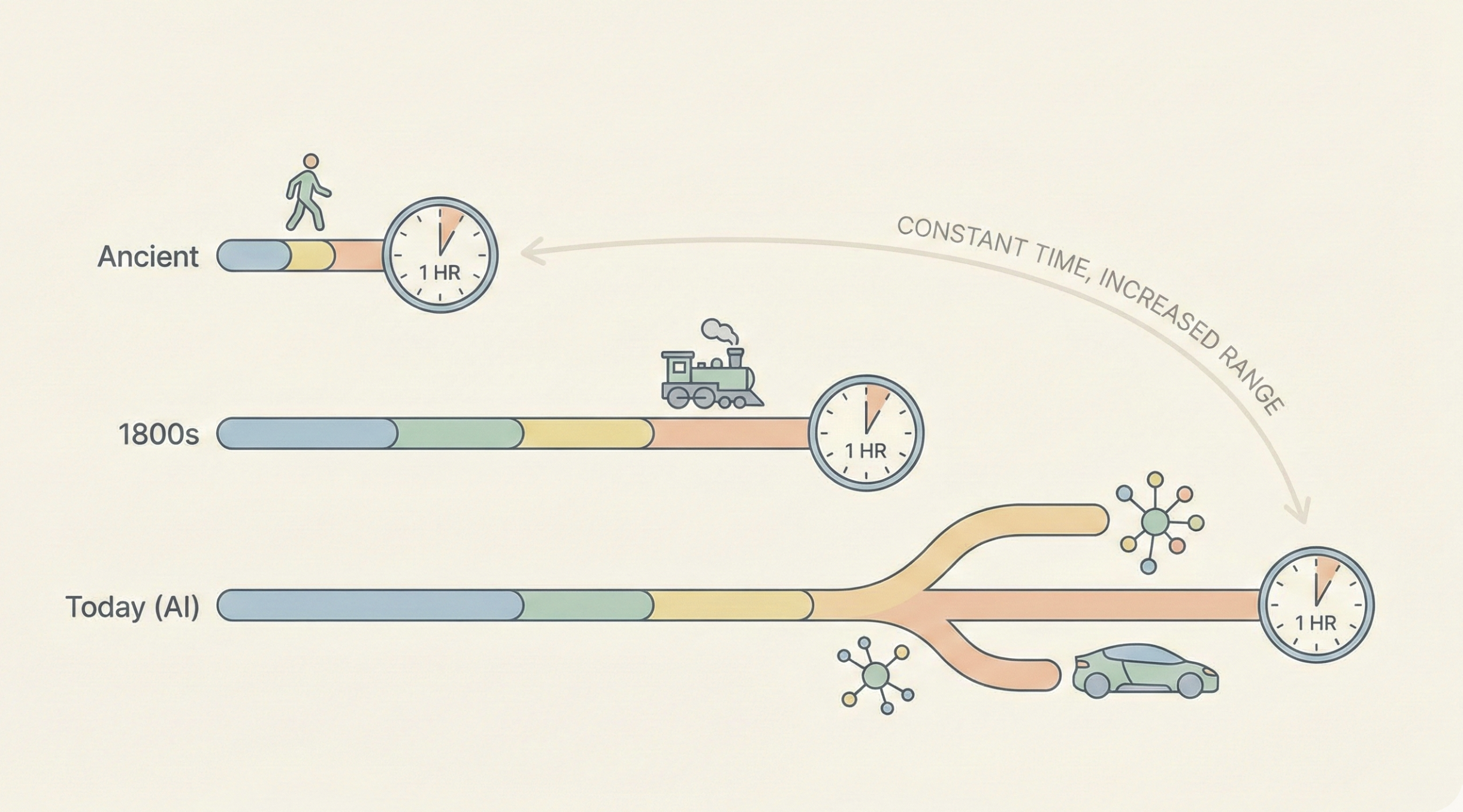
In the 1970s, physicist Cesare Marchetti discovered that across every era, humans protect a “travel time budget” of roughly one hour per day.
-
Ancient Rome: People walked. The city was 5km wide (a 30-minute walk to the center).
-
1800s: Trains and trams arrived. People didn’t save time; they moved further away, and the city radius grew to 20km.
-
Today: We have high-speed cars and highways. We still spend an hour traveling, but we live 50km away.
The pattern is clear: We don’t use speed to buy back time. We use it to expand our territory.
This is exactly what is happening with AI in 2026.
If AI helps you finish a task in 10 minutes instead of 10 hours, you don’t go home early. You just produce 60 times more output. You add more features, more complexity, and more noise until your “mental commute” hits that same one-hour exhaustion limit.
The work simply expands to fill the new capacity.
Efficiency is a trap if you don’t have a plan for the surplus. The goal shouldn’t be to build a bigger “city” of tasks. It should be to use that saved energy for things AI can’t touch, like deep strategy or high-stakes human relationships.
Are you using AI to shorten the path, or are you just driving further into the noise?
Read next
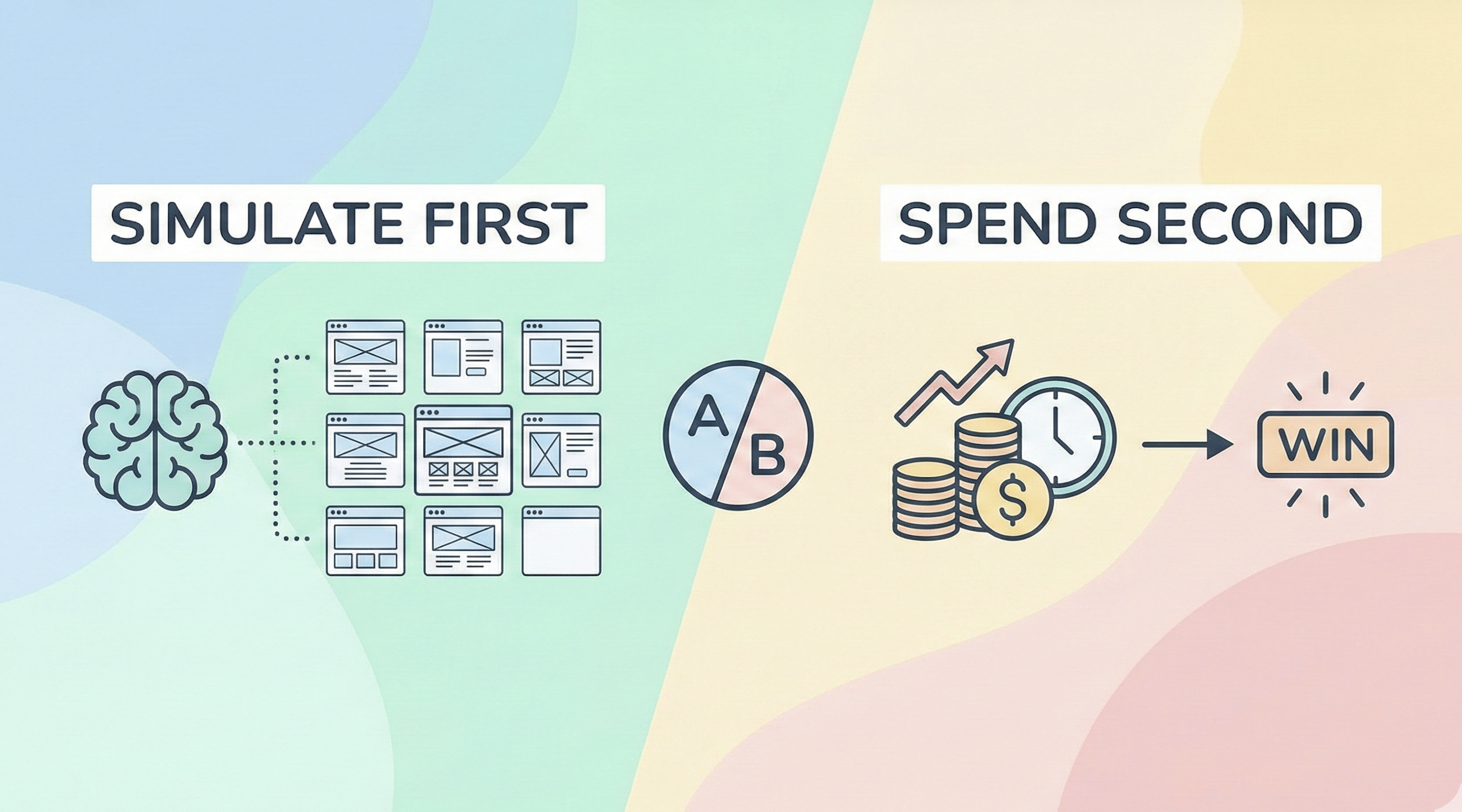
Stop Paying the Market to Do Your Homework
Stop burning budget on A/B tests that fail. Discover how AI simulations let you test creative before you spend a dollar. Move from guessing to winning today.
Jan 26, 2026
What a Library in Copenhagen Knows That ChatGPT Doesn't
Ask AI to research your “ideal customer segment”.
Jan 23, 2026
Your Next Customer Isn’t Human
Your company is being \"silently delisted\". AI agents block you before humans see you. Unlock the 3 data rules to bypass the gatekeeper and secure sales.
Jan 22, 2026